
Navigating China's 20 Measures to Stabilize Foreign Investment
A comprehensive guide to the State Council's latest action plan and what it means for foreign businesses eyeing the China market
CHINA BUSINESS UPDATES
Foreign investment in China is entering a new chapter. On February 19, 2025, the State Council released its Action Plan for Stabilizing Foreign Investment, a package of 20 concrete measures jointly developed by the Ministry of Commerce (MOFCOM) and the National Development and Reform Commission (NDRC). The plan sends a clear signal: China is not just keeping its doors open — it is widening them.
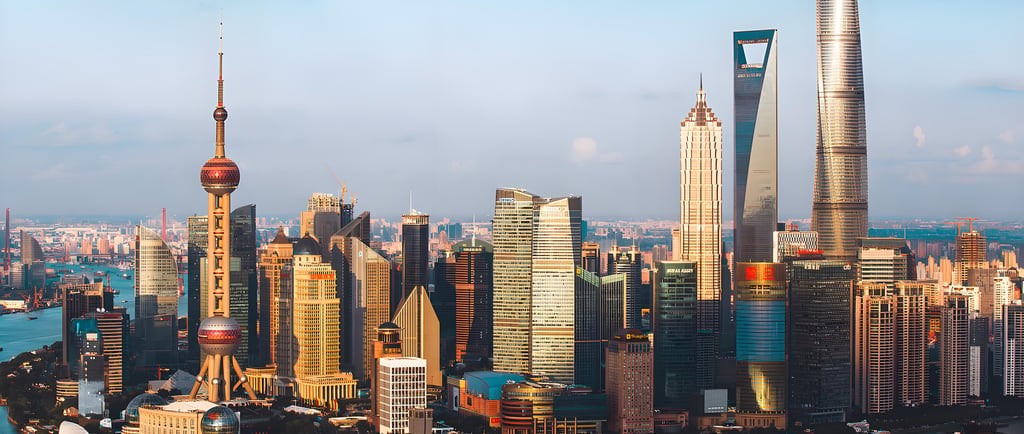
For foreign companies evaluating market entry or expansion, these measures remove longstanding barriers in ways that would have been unthinkable just a few years ago. And for those deciding where in China to plant their flag, Shanghai stands out as the most compelling destination.
What the 20 Measures Actually Change
The action plan is structured around four pillars: expanding opening-up, improving investment promotion, strengthening opening-up platforms, and enhancing investor services. Here are the changes that matter most.
1. Sector Restrictions Are Falling
Manufacturing foreign investment restrictions have been fully lifted — no exceptions. Beyond manufacturing, pilot programs are opening previously restricted sectors:
Telecommunications: Foreign equity caps on Internet data centers and value-added telecom services have been removed in four pilot regions — Beijing, Shanghai, Hainan, and Shenzhen. By end of 2024, 2,343 foreign-funded enterprises had already been approved for telecom operations nationwide.
Healthcare: Wholly foreign-owned hospitals are now permitted in designated pilot cities. Cell therapy and biopharmaceutical companies can participate in segmented production trials, and innovative drug approval timelines are being accelerated.
Education and Culture: Implementation plans for broader foreign participation are forthcoming, marking a significant shift in sectors long considered sensitive.
2. Investment Structures Are Getting Easier
Several measures directly reduce the friction of establishing and scaling operations in China:
Domestic loans for foreign investment companies are now permitted, removing a significant capital constraint for foreign-invested enterprises (FIEs) setting up or expanding operations.
Multinational regional headquarters receive optimized regulations, with conveniences in foreign exchange management, personnel entry and exit, and cross-border data flows.
M&A thresholds are being lowered, with revised regulations under the Foreign Investment Law reducing barriers for cross-border share swaps and acquisitions.
Reinvestment is actively encouraged, with a 10% tax credit on profits reinvested in encouraged industries (2025–2028), subject to a five-year holding period. Mid-2025 guidelines further removed sector restrictions on reinvestment eligibility.
3. People Can Move More Freely
Talent mobility has long been a pain point for foreign companies in China. The action plan commits to:
Accelerating visa exemption negotiations with additional countries
Expanding unilateral visa-free entry policies
Optimizing transit, port, and regional visa arrangements
Updating practical guides for foreign business personnel
4. Data Flows Are Being Facilitated
For multinational headquarters and investment companies, the plan introduces convenience measures for cross-border data transfers — a critical issue for companies whose operations require data to move between China and global systems. While China's data governance framework (the Data Security Law, Personal Information Protection Law, and Cybersecurity Law) remains in force, these measures signal a pragmatic approach to enabling legitimate business data flows.
5. The Catalogue of Encouraged Industries Is Expanding
The 2025 edition of the Catalogue — which determines eligibility for preferential tax rates, land-use policies, and other incentives — is being revised to include more categories in advanced manufacturing, modern services, high-tech industries, and energy conservation. Companies whose activities fall within the Catalogue enjoy meaningful cost advantages.
Why Shanghai?
China is a vast market, and the 20 measures apply nationwide. But Shanghai offers a concentration of advantages that few other cities can match.
Financial Incentives That Add Up
Shanghai has introduced its own local incentive package to complement the national measures:
RMB 3 million cash rewards for companies that upgrade their China offices to Asia-Pacific regional headquarters with multiple functions
Up to RMB 10 million for establishing global business unit headquarters
A 15% reduced corporate income tax rate for qualified high-tech enterprises and advanced technology service firms (compared to the standard 25%)
Subsidies for R&D partnerships with local universities
Support for establishing venture capital funds
Streamlined customs clearance for headquarters operations
Easier work visas and residency permits for foreign staff and their families
Shanghai has also released 20 local measures specifically encouraging FIEs to reinvest undistributed profits in the domestic market — stacking local incentives on top of the national 10% reinvestment tax credit.
A Proven Track Record
The numbers speak for themselves. In 2024, China established 59,080 new foreign-invested enterprises, up 9.9% year-on-year, and that number rose to 70,392 in 2025 — a further 19.1% increase. Shanghai consistently accounts for a disproportionate share of these, particularly in high-tech and services sectors.
On February 19, 2025, Shanghai hosted a Briefing on Business Situation attended by officials from 53 countries' consulates, 31 overseas trade agencies, and 238 foreign-funded enterprises — over 500 guests in total. The city identified ten key breakthrough tasks for business environment optimization, with foreign investors as a primary audience.
The Free Trade Zone Advantage
The China (Shanghai) Pilot Free Trade Zone — including the Lin-gang Special Area — remains one of China's most liberalized business environments. It is one of four designated pilot regions where telecom foreign equity restrictions have been removed, and it continues to serve as a testing ground for broader reforms before they are rolled out nationally.
Companies that establish in the FTZ benefit from regulatory innovation, faster approvals, and proximity to policymakers who are actively seeking foreign participation.
Sector Alignment
Shanghai's priority sectors closely mirror the industries targeted by the national 20 measures: high-tech, advanced manufacturing, modern services, financial services, healthcare, and biotech. This alignment means that foreign companies entering these sectors in Shanghai benefit from both national and municipal policy support — a double tailwind that compounds over time.
The Bigger Picture
China's FDI landscape is evolving. Actual utilized FDI in 2025 was RMB 747.69 billion (US$104.68 billion), and while the headline number reflects a 9.5% year-on-year decline, the composition tells a more nuanced story. High-tech FDI reached RMB 241.77 billion, accounting for 32.3% of total inflows — the highest share on record. The services sector absorbed 72.9% of total FDI. Foreign capital is not leaving China; it is moving up the value chain.
Major multinationals continue to deepen their commitments. Volkswagen invested €3.5 billion in its Hefei new-energy vehicle hub. Sanofi broke ground on a €1 billion pharmaceutical facility in Beijing. Schneider Electric operates 30 factories and five R&D centers across the country. These are not hedging bets — they are long-term strategic plays.
The 20 measures, combined with Shanghai's local incentives and institutional infrastructure, create a window of opportunity for foreign businesses that are prepared to act. Market entry barriers are lower than they have been in years. The regulatory direction is clear. And Shanghai is positioning itself as the city that makes it easiest to get started.
How We Can Help?
Navigating China's investment landscape requires more than reading policy documents. It requires understanding how national measures interact with local incentives, how pilot programs translate into operational reality, and how to structure your entry in a way that maximizes long-term advantage.
Our team provides end-to-end advisory on market entry strategy, corporate structuring, regulatory compliance, and ongoing operational support for foreign businesses in Shanghai and across China. If you are considering your next move, [contact us] to discuss how the latest policy developments apply to your specific situation.
This article is for informational purposes only and does not constitute legal advice. Policy details are based on publicly available government announcements and may be subject to further revision.
© 2015-2026 Gomax Group. All rights reserved.
Floor 11, Building 40, No.1888 Xinjinqiao Road, China Free Trade (Shanghai) Pilot Zone,201206
GOMAX GROUP
US Headquarter
China Headquarter
10361 Regent Square, 705#, Orlando, Florida 32825, USA
SERVICE CITIES & REGIONS
GLOBAL EXTENSION
United States
Singapore
Dubai
Thailand
Japan & more
Shanghai
Nantong
Suzhou
Nanjing
Chengdu
Shenzhen
Taicang
Hangzhou
Qingdao
Hainan
Guangzhou
Xi An
Ningbo
Wuxi
HK & more